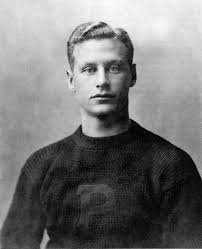

Tommy Kirk, 1960
Tommy Kirk cried on camera and made an entire generation cry with him. As Travis Coates in Disney’s 1957 “Old Yeller,” he had to raise a rifle and shoot the family dog he loved, and that scene is still, six decades later, one of the most reliable tear-jerkers in American film. Kirk went on to star in “The Shaggy Dog,” “Swiss Family Robinson,” and “The Absent-Minded Professor,” becoming, for a few years, Walt Disney’s most bankable young leading man. Then, in 1964, at 21, he was fired. Disney’s official account was vague. The real reason, as Kirk told interviewers decades later and as Hollywood Reporter and Washington Post obituaries confirmed after his death in 2021, was that studio executives had learned he was gay — they found out, according to those accounts, after he began a relationship with a teenager he’d met at a pool, and the boy’s mother alerted the studio. Whatever the specifics, the result was uncomplicated: Disney, “a family film studio” that needed him to be its “young leading man,” as Kirk put it, dropped him and never looked back. He spent the rest of his career doing low-budget schlock, fought addiction, worked as a carpet cleaner, and died largely forgotten by the industry that once built its wholesome image around his face.
Kirk’s story is the cleanest, cruelest illustration of a pattern that ran through Hollywood for most of the twentieth century: talented people, sometimes at the absolute height of their careers, were destroyed — professionally, financially, occasionally literally — because they were gay, or rumored to be, in an industry that could not tolerate it. It’s worth walking through that pattern properly, because the modern coda to it — a generation of performers whose careers didn’t end when they came out, but took off — only makes sense against that history.
The lavender marriage era

William Haines, 1920
Before there were tabloids sophisticated enough to run blackmail-adjacent exposés, there were studio executives handling the problem directly. William Haines was MGM’s top box-office draw from 1928 to 1932, a genuine silent-era superstar. In 1933, studio chief Louis B. Mayer called Haines into his office and gave him a choice: leave his longtime partner, Jimmie Shields, and enter a sham marriage to a woman, or lose his contract. According to multiple accounts of the meeting, Haines said “I am married” and walked out. Mayer fired him on the spot. Haines never made another studio film. He and Shields stayed together for nearly fifty years, and Haines rebuilt an entirely new career as one of Hollywood’s most sought-after interior designers — a genuine second act, but one that required abandoning acting altogether.
Van Johnson, an MGM heartthrob of similar stature, was effectively outed by the tabloid Confidential in 1954. The studio’s solution, as biographer Mark Griffin described it to NPR, was the same one applied to Haines: an arranged marriage, engineered to keep the machine running a little longer.
Before you jump to “gay white guy” syndrome, take the extraordinary case of Ethel Waters.

Ethel Waters, 1957
Ethel Waters was an actor (Cabin in the Sky (1943): She starred as Petunia Jackson in this all-black musical fantasy directed by Vincente Minnelli, performing the Oscar-nominated song “Happiness is a Thing Called Joe”. Pinky (1949): Waters played a wise grandmother in this racial drama and earned an Academy Award nomination for Best Supporting Actress. The Member of the Wedding (1952)) and singer who had to hide her sexuality behind a string of marriages.
First Marriage: She married Merritt “Buddy” Purnsley in 1909 (or 1910) when she was only 13 years old. The marriage was abusive, and she left him around 1913. Second Marriage: She married Clyde Edwards (or Matthews) around 1928–1929, and that marriage lasted for about four years. Third Marriage: She married Edward Mallory in 1938, and they remained together for about seven years before divorcing.
Ethel Waters hid her relationship with with dancer Ethel Williams, becoming the “Two Ethels”, and one of the most significant relationships of the early Blues Era.
The Confidential years

Tab Hunter, 1955
By the mid-1950s, the threat had shifted from studio bosses to scandal magazines willing to publish what the studios spent fortunes suppressing. Confidential was the worst offender, and its favorite target, unbeknownst to most of the public, was almost Rock Hudson. Hudson’s agent, Henry Willson, learned the magazine was preparing an exposé on his top client — by then one of the biggest box-office draws in the world — and, according to Hudson biographer Mark Griffin, cut a deal to feed the magazine stories about two of his other clients instead: Rory Calhoun and Tab Hunter.
Hunter later wrote about the fallout candidly. Confidential ran a story about a party he’d attended years earlier where police had arrested several guests, including him, for disorderly conduct — nothing more than young men and women dancing together at a private house, but the magazine dressed it up as a “pajama party” with lurid insinuations. Hunter recalled thinking his career was finished. It survived, mostly because Warner Bros. simply declined to react, but Hunter spent the rest of his career carefully managing his public image, dating starlets for the cameras, and staying silent about his own life until his 2005 memoir, published a full fifty years after the Confidential story ran.
Rock Hudson, meanwhile, got the fuller studio treatment: a hasty, arranged marriage to his agent’s secretary, Phyllis Gates, in 1955, engineered specifically to head off exactly the kind of story that had just hit Hunter and Calhoun. The marriage lasted barely three years. Hudson kept his private life private for the next thirty, remaining, by most accounts, one of the most successful and admired leading men in the world right up until 1985, when he became the first major American celebrity to announce he had AIDS. He died two months later. His death, and the presumptive outing that came with the diagnosis, is widely credited with forcing AIDS into mainstream public conversation for the first time — a legacy Hudson never chose, arriving only because concealment was no longer possible.
Liberace took concealment further than almost anyone. In 1959 he sued a British newspaper for implying he was gay, testified under oath that he wasn’t, and won the largest libel judgment in British legal history at the time. He denied it again in 1982, when his former chauffeur and lover Scott Thorson sued him for palimony. He denied it right up until his death in February 1987, when his own doctor listed the cause as cardiac arrest and his management team fought the Riverside County coroner’s decision to order an autopsy. The autopsy confirmed AIDS. The coroner’s office had to sue Liberace’s estate to make the truth stick. It’s hard to find a starker measure of how dangerous an admission of homosexuality was considered to be than a dying man’s team falsifying his death certificate to avoid it.
What it actually cost them

Anthony Perkins, Tab Hunter’s Apartment, 1958
| Performer | Career-defining moment | What homophobia did to it |
|---|---|---|
| William Haines | MGM’s top box-office star, 1928–1932 | Fired in 1933 for refusing a sham marriage; never acted in a studio film again |
| Anthony Perkins | 1960s star of Alfred Hitchcock’s Psycho | live a hidden double life, undergo painful conversion therapy, and hide his true self out of fear of career ruin |
| Tab Hunter | 1950s teen idol, Warner Bros.’ top-grossing star | Outed by Confidential magazine in 1955; spent decades managing a closeted public image |
| Rock Hudson | One of the top box-office draws of the 1950s–60s | Forced into an arranged marriage to avoid exposure; died of AIDS in 1985, still largely closeted to the public |
| Liberace | Highest-paid entertainer in the world at his peak | Denied his sexuality under oath twice; falsified his own cause of death rather than admit it |
| Tommy Kirk | Disney’s top young leading man, late 1950s–early 1960s | Fired in 1964 after being outed; career never recovered |
The turning point, and its price
Michelle Obama and Ellen DeGeneres, 2012

Ellen DeGeneres came out on the cover of Time magazine and on her own sitcom in April 1997, in “The Puppy Episode,” watched by an estimated 42 million people. It was a genuine cultural landmark and, initially, a ratings triumph. It also effectively ended the show: “Ellen” was canceled roughly a year later, and DeGeneres has said she struggled to find work for a stretch afterward. Rosie O’Donnell came out in 2002, shortly after her own daytime talk show ended, and spent the mid-2000s in smaller television roles before resurfacing on “The View” in 2006.
Both women eventually built durable second acts — DeGeneres’s own daytime talk show became a ratings juggernaut that ran for nineteen years — but the timeline matters. Coming out in 1997 or 2002 still came with a real, immediate professional cost. The industry hadn’t caught up yet. It was close, but it hadn’t arrived.
The reborn generation
What changed, within roughly a decade, is genuinely striking. Neil Patrick Harris came out publicly in 2006, partly to get ahead of a blogger who was actively trying to out him. At the time, he was playing Barney Stinson, a relentlessly heterosexual womanizer, on the freshman hit “How I Met Your Mother.” Nothing happened to the show. Harris kept playing Barney for eight more seasons, won a Tony for “Hedwig and the Angry Inch,” hosted the Tony Awards four separate times, hosted the Oscars, and became one of the most in-demand hosts in American entertainment — his sexuality, once it was public, functioning as a total non-issue rather than a career hazard. Britannica’s summary of his career doesn’t even treat the coming-out as a plot point; it’s a footnote in an unbroken upward trajectory.
George Takei came out in 2005, at 68, decades after “Star Trek” had already made him a cult figure, in direct response to Governor Arnold Schwarzenegger’s veto of a same-sex marriage bill in California. Rather than fading, Takei became dramatically more famous afterward — one of the most-followed people on early social media, a Broadway lead in “Allegiance,” and a genuine public intellectual on both LGBTQ rights and Japanese American internment history. His visibility as an out gay man didn’t shrink his platform. It became the platform.
The contrast with Tommy Kirk is almost unbearable to sit with directly. In 2006 — the same year Neil Patrick Harris came out to zero professional consequence — Disney inducted Kirk into its Disney Legends hall of fame, more than four decades after quietly firing him for the very thing the company was now, belatedly, honoring. He died broke and estranged from most of his blood family. The dog he shot in “Old Yeller” is still one of the most famous tearjerker scenes in American cinema. The industry that made him cry on camera never gave him the chance to grow old in front of one.
Sources
- The Hollywood Reporter, Tommy Kirk obituary
- LGBTQ Nation, “This child actor’s gay days at Disney cost him his career”
- PinkNews, William “Billy” Haines profile
- NPR, “All That Heaven Allows: Rock Hudson’s Life As A Closeted Leading Man”
- The Hollywood Reporter, Tab Hunter guest column on being nearly outed in 1955
- Big Issue, “Rock Hudson: How an Aids diagnosis saw the closeted Hollywood icon finally accepted”
- Utterly Interesting, “Liberace vs The Daily Mirror”
- Wikipedia, “The Puppy Episode”
- Wikipedia, Rosie O’Donnell
- Britannica, Neil Patrick Harris
- University of California Santa Barbara, “Star Trek actor George Takei and coming out in 2005”