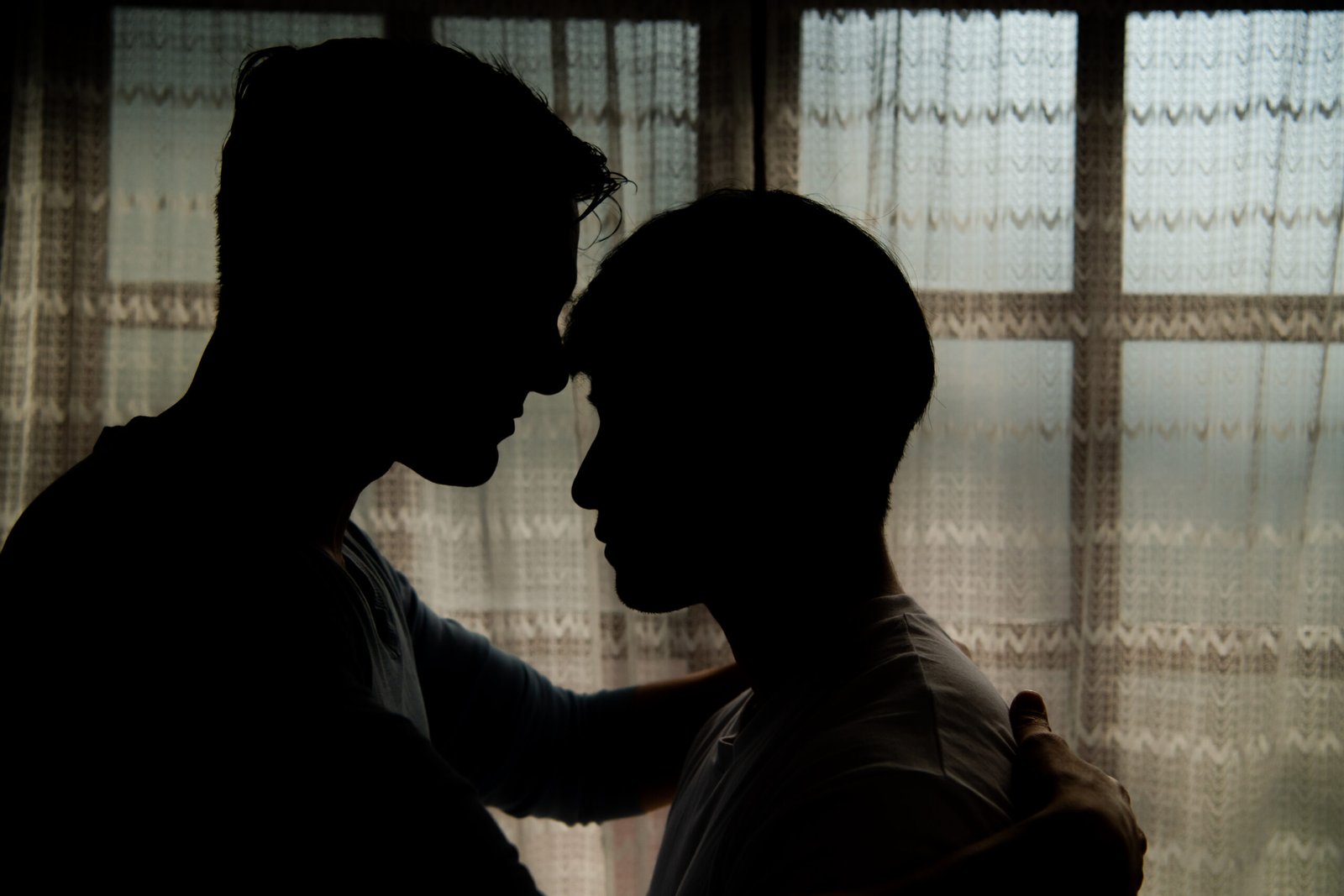
Cruising is one of the oldest and least explained parts of gay life. Most guys learn what they know about it from a nervous joke, a half-finished sentence from an older friend, or a Grindr notification that suddenly makes sense in a way it didn’t yesterday. This piece is an attempt to close that gap honestly — the history, the codes, the apps, the actual etiquette, and the parts that are less about sex than they look. It’s frank because pretending cruising is something else does new guys no favors. It’s also written with real tenderness, because almost everyone who’s done this remembers exactly how unready they felt the first time, and that feeling deserves company rather than mockery.
A short, real history
Cruising predates the word for it. Gay men were arranging anonymous meetings in City Hall Park in Manhattan as early as the 1840s, decades before “homosexual” was even a word in common use. The practice spread wherever cities gave men enough anonymity to disappear into a crowd: Washington Square Park by the 1910s, bathhouses through the early twentieth century, and eventually a whole geography of parks, piers, train stations, and public bathrooms that queer men learned to read like a second language.
The word “cruising” itself only became gay slang in the 1960s, and the 1970s — after Stonewall, before AIDS — are usually remembered as its high-water mark. Bathhouses like New York’s Continental Baths mixed sex with disco and cabaret; regulars reportedly included Andy Warhol and Bette Midler got an early boost performing there. By some counts there were close to 200 gay bathhouses operating across American cities by the late 1970s. New York’s Christopher Street piers and Fire Island’s “Meat Rack” became legendary cruising grounds, chronicled by writers like Larry Kramer and filmmaker Peter de Rome.
Then came 1981, and everything narrowed. Public health officials, city governments, and no small amount of panic combined to shut bathhouses down — New York ordered its gay bathhouses closed in 1985 — and cruising culture spent the following two decades rebuilding itself under the shadow of the epidemic, with safer-sex education slowly replacing the total silence that had preceded it. What survived did so quietly: a handful of bathhouses, backroom bars, and outdoor spots that regulars kept alive by word of mouth. Grindr’s 2009 launch didn’t invent any of this. It digitized something gay men had already been doing for nearly two centuries, and it changed the geography again without erasing the older one — plenty of guys still meet through an app and then walk to the same park their grandfather’s generation used.
The hanky code, decoded
Before apps, before even reliable eye contact in a dim bar, gay men needed a way to signal a specific interest without saying a word out loud in a room where saying it out loud could get someone arrested, fired, or worse. The hanky code filled that gap. Most historians trace its modern form to the early 1970s, either through a joking Village Voice column or a San Francisco erotic-goods store called The Trading Post that started printing cards explaining what each color meant. A colored handkerchief worn in the left back pocket signaled a “top” or dominant role; the same color on the right signaled “bottom” or submissive. It borrowed, oddly enough, from cowboys and railroad workers, who’d used bandanas the same way at Gold Rush–era dances where men had to stand in for women partners.
Nobody owns the code and there was never one single official chart — meanings shifted by city and by decade — but a rough, commonly cited version looks like this:
| Color | Commonly cited meaning |
|---|---|
| Red | Fisting |
| Dark blue | Anal sex |
| Light blue | Oral sex |
| Yellow | Watersports |
| Black | BDSM / leather, dominance |
| Grey | Bondage |
| White | Masturbation |
| Orange | “Anything, anytime” |
Almost nobody wears a hanky to cruise in 2026. But the code hasn’t disappeared so much as migrated: it lives on in leather-bar dress codes, in Pride flagging jokes, and in the DNA of nearly every app profile field that now asks “here for” or lists roles and kinks in plain text instead of cotton. The underlying idea — say what you’re into clearly, before things get physical, so nobody has to guess — is still the whole point, whether it’s silk in a back pocket or a line in a bio.
Where it actually happens now
Cruising happens in roughly three kinds of space, and they carry genuinely different levels of risk.
Purpose-built venues — bathhouses, saunas, sex clubs, and bars with a “backroom” — are the safest tier by a wide margin. Everyone present is there for the same reason, staff are usually around, condoms and lube are typically supplied, and there’s no ambiguity about what the space is for. A handful of historic bathhouses, like Studs Theatre in West Hollywood, which has operated since the 1940s, still function today.
Outdoor and semi-public spots — parks, beaches, wooded paths, rest stops — are the oldest form and carry the most legal and personal risk, because the space wasn’t built for this and isn’t policed with that use in mind. Some, like London’s Hampstead Heath, New York’s Ramble in Central Park, the Maspalomas dunes in Gran Canaria, and Berlin’s Tiergarten, have decades of established, semi-tolerated use. Others are just a spot someone mentioned once and nobody’s checked on since — which is exactly the kind of place to be most careful about.
Apps now sit alongside both, sometimes as the whole plan and sometimes as the thing that gets two guys from a screen to an actual room. Understanding what each one is actually built for saves a lot of wasted swiping:
| App | Built for | What makes it different |
|---|---|---|
| Grindr | Everything from a quick hookup to a boyfriend | The largest user base by far; grid-and-chat format; not laid out for anonymous map-based cruising the way Sniffies is |
| Scruff | Bears, leather, and a more community-and-travel-minded crowd | Smaller and reportedly more stable user base; strong travel and event features for finding what’s happening while abroad |
| Sniffies | Fast, anonymous, in-person meetups | Browser-based, no app-store install; a live map with profile dots pinned to real locations rather than a scrollable grid |
| Recon | Kink, fetish, and leather specifically | Built around gear and fetish community rather than general dating |
| Hornet | A broader social-network feel | Leans more toward community, news, and events alongside hookup features |
A practical note for anyone new to this: apps show intent, not consent. A profile that says “here for now” is not an appointment, and matching on an app is the start of a conversation, not the end of one.
Reading the room
Cruising, especially the outdoor and bathhouse kind, runs on signals most newcomers have never been taught to read, which is exactly why it feels so opaque the first few times. The basics, according to guys and sexologists who write about this regularly: lingering eye contact that breaks and returns, standing nearby without an obvious reason, mirrored movement, a slow walk that circles back. None of that is a green light on its own — it’s an invitation to keep paying attention, not permission to touch.
That distinction matters enormously and is worth saying plainly: eye contact is not consent, walking toward someone is not consent, and being in a cruising space at all is not consent. Consent applies in cruising spaces exactly as much as anywhere else, even when the whole scene runs on unspoken signals rather than a verbal ask. If someone isn’t reciprocating clearly, the answer is to back off, not to escalate and see what happens. Voyeurism — watching rather than participating — is a real and long-standing part of cruising culture in venues built for it, but even that runs on the same rule: only watch people who are signaling that they want to be watched.
A short, unglamorous list of what actually helps a first outing go well: bring lube, condoms, and wipes; skip the strong cologne; keep your phone charged; tell a friend roughly where you’ll be, the same way anyone would for a solo hike; and decide your own limits before arriving rather than while flustered in the moment. None of that is a mood-killer. It’s what lets the fun part actually be fun.
Staying safe, actually
This is the part worth being completely frank about, because vague advice here helps nobody.
Health. PrEP (pre-exposure prophylaxis) remains the strongest tool against HIV transmission for anyone sexually active with multiple or casual partners, and it’s worth a real conversation with a doctor or a sexual health clinic rather than secondhand advice. Since 2024, the CDC has also formally recommended doxy-PEP — a single dose of the antibiotic doxycycline taken within 72 hours of sex — for gay and bisexual men and transgender women who’ve had a bacterial STI (syphilis, chlamydia, or gonorrhea) in the past year, after trials showed it cut syphilis and chlamydia infections by more than 70% and gonorrhea by roughly half. Regular STI testing, not just when something feels wrong, is the other half of the equation — most STIs are symptomless at first, especially in gay men, which is precisely why routine testing matters more than instinct.
Substances. Poppers, GHB, and erectile-dysfunction medications show up often enough in cruising and party spaces that it’s worth saying directly: mixing GHB with alcohol, or poppers with ED medication, carries real overdose and cardiac risk, and it’s not a risk worth taking to seem chill. Staying reasonably clear-headed isn’t prudishness — it’s what keeps a person able to actually read consent and get themselves home.
Legal reality. Public sex laws vary enormously by country, state, and even by specific park, and enforcement has historically fallen disproportionately on gay men — a pattern with a long, ugly history of police entrapment stretching back over a century. That history isn’t an argument against outdoor cruising existing; it’s a reason to know the local legal climate before assuming a spot is as tolerated as it looks. When in doubt, venues built for this — bathhouses, saunas, clubs — carry dramatically less legal exposure than a park after dark.
The exit plan. Simple and easy to forget: know how you’re getting home before you need to, don’t hand over more personal information than feels necessary to a stranger, and trust the instinct that something feels off over the instinct to be polite about it.
The part nobody really warns you about
The mechanics are the easy part to write down. The harder part is what happens internally the first few times, and it deserves to be said plainly: it is completely normal to feel nervous, self-conscious, too eager, not eager enough, or all four in the same ten minutes. Nobody arrives at this fully fluent. The guys who look most at ease were once exactly as unsure as anyone reading this now — they just had more Tuesdays to practice on.
It’s also fine, genuinely, to go somewhere, feel the vibe, and leave without anything happening. That’s not failure; a huge amount of cruising culture, historically and today, was as much about being seen in a space built for people like you as it was about any specific encounter. Rejection in this context is rarely personal — timing, mood, and type all move faster here than almost anywhere else in dating, and reading it as a verdict on your worth is a habit worth unlearning early. Whatever draws someone here — curiosity, horniness, loneliness, the simple desire to feel wanted by someone who isn’t asking for a relationship — is a legitimate reason, and it sits inside a two-hundred-year lineage of gay men finding each other when very little else in the world made that easy.
Sources
- The Origins of Cruising — Medium/Maude
- Bathhouses And Beyond: A Brief History Of Gay Cruising — Queerty
- 185 years of gay cruising: A brief history — QSaltLake Magazine
- Sex & Cruising — NYC LGBTQ Historic Sites Project
- A Brief History of Gay Cruising — Brian Gerald Murphy
- The hanky code’s history and meaning in LGBTQ+ culture — GayCities
- The Handkerchief Code, According to Bob Damron’s Address Book — The Saint Foundation
- Gay Cruising: Safety Tips & A Guide to Finding Cruising Spots — Grindr
- Gay sex and dating experts on how to cruise safely and successfully — Out
- Off the Beating Path: A Beginner’s Guide to Gay Cruising Etiquette and Safety — Two Bad Tourists
- Gay Cruising 101: How to Cruise Safely, Confidently & Get What You Want — Hey Alex Gay
- Doxy PEP for Bacterial STI Prevention — CDC
- CDC Clinical Guidelines on Doxycycline Postexposure Prophylaxis, 2024 — MMWR
- An Honest Review of Gay Dating Apps in 2026 — Travels of Adam
- Sniffies — Wikipedia