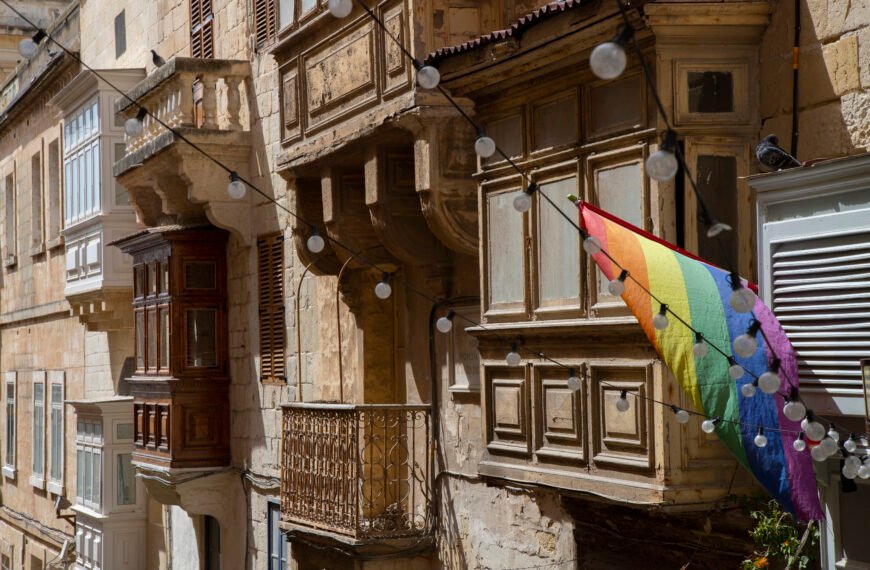

On 5 July 2026 the Scarlet Lady, a Virgin Voyages ship chartered by Atlantis Events, left Athens with about 1,900 passengers, roughly 1,100 of them American (CNN). Two Turkish stops were on the schedule. Officials in Aydın province, home of the port of Kuşadası, said the groups behind the charter were known for behavior at odds with the country’s moral values, and the Istanbul call went with it. The ship was then turned away from Egyptian waters too. Atlantis chief executive Rich Campbell said Turkey would lose at least $1 million. Turkey took in $65.2 billion from tourism in 2025. The lost calls came to about 0.0015 percent of that.
That arithmetic sits under most arguments about gay travel and boycotts. This piece looks at Turkey, Tanzania and Uganda mainly through money: who has it, who can move it, and what happened when people tried. The moral question comes late and briefly. The financial record is less kind to both sides than the usual arguments suggest.
Three countries, three problems
| Country | The law | Recent enforcement | Tourism, 2025 |
|---|---|---|---|
| Uganda | The 2023 Anti-Homosexuality Act carries life imprisonment, and death for “aggravated homosexuality.” It applies to visitors. Courts upheld it in April 2024. | US advisory warns of vigilante attacks and a duty to report suspects | 1.64 million arrivals, about $1.62 billion |
| Tanzania | Colonial-era penal code, up to life imprisonment on the mainland, up to 14 years for men in Zanzibar | In 2018 Dar es Salaam’s regional commissioner, Paul Makonda, announced a hunt for gay residents | 2.29 million arrivals, about $4.4 billion |
| Turkey | Not a crime since 1858 | Pride banned since 2015; September 2026 raids on bars and associations | 52.8 million foreign visitors, $65.2 billion |
How people navigate it
The advice that circulates among gay travelers in these places is consistent and unglamorous. Stay in insulated settings such as safari lodges, private camps and beach resorts. Out Office, a gay tour operator, says enforcement against foreign visitors in Tanzania is rare compared with enforcement against Tanzanians and long-term residents. It also sells the trips, so it has a stake in people going. Skip public affection. Stay off dating apps. In 2018 the US government told visitors to Tanzania to delete social media content that might run afoul of its laws on homosexual practices. Human Rights Watch documented police entrapment through Grindr and Facebook in Egypt, Iraq, Jordan, Lebanon and Tunisia (summary). Comparable documentation for East Africa is thinner, which is not the same as safety.
In Uganda the exposure is not only the traveler’s. The State Department notes that people suspected of intending an offense can be reported to police and that supporters of LGBTQ+ rights can be prosecuted too. The person most at risk from a careless photo or message is often the local guide, driver or host.
Turkey is different in kind. Same-sex relations are legal, so the risk is discretionary: banned Pride marches, raids, obscenity charges. A draft penal code change criminalizing behavior “contrary to biological sex” was withdrawn in late 2025, though a pro-government paper reported in February that the Justice Ministry would bring it back as standalone legislation. This year’s reported cases involve Turkish associations, bars and Pride crowds. The cruise refusal is the clearest recent case aimed at visitors as visitors.
Who has moved money, and how much
| Case | Who moved the money | Scale | What followed |
|---|---|---|---|
| North Carolina’s HB2, 2016 to 2017 | Corporations, sports leagues, convention planners | At least $3.76 billion over 12 years, per AP | PayPal’s $2.66 billion expansion was the biggest single loss |
| Brunei’s Dorchester Collection hotels, 2019 | Event hosts and celebrities | Not quantified | The Sultan announced a moratorium on the death penalty for the new offenses |
| Tanzania, 2018 | Denmark | $10 million in aid | The foreign ministry called Makonda’s plan a personal opinion |
| Uganda, 2023 to 2025 | World Bank | New lending frozen for nearly two years | Resumed June 2025; about $2 billion every three years planned from 2026 |
| Turkey, July 2026 | One charter operator | About $1 million | Ship rerouted |
Three patterns show up.
First, the money that moved was concentrated. AP’s North Carolina ledger is dominated by a few decisions: PayPal, Deutsche Bank, CoStar, the NBA. Ordinary leisure visitors barely appear. Durham’s convention bureau chief, Shelly Green, said the biggest impact was phones not ringing. Groups ruled the state out before booking and left no cancellation to count. For a would-be boycotter this has a plain corollary: a silent boycott is invisible. If nobody tells the buyer why, the numbers look like a soft year. HB2’s defenders also noted the total was small beside an economy above $500 billion a year.
Second, institutions that can afford the loss tend to come back. The World Bank froze new Uganda lending in August 2023 and resumed in June 2025, saying its mitigation measures were satisfactory. Activists such as Richard Lusimbo of the Uganda Key Population Consortium had urged it not to. The Brunei case worked differently. Its target was hotels owned by the Sultan’s investment agency, and the events at stake, such as awards dinners and property-industry functions, were easy to move. Government pressure and public outcry ran alongside the boycott, so causation is not clean.
Third, tourist boycotts do not show up in the data. Uganda’s arrivals went from 1.27 million in 2023 to 1.37 million in 2024 and 1.64 million in 2025, 106 percent of the 2019 level. Tanzania and Turkey both posted records. None of these statistics break out visitors by sexual orientation, and the mix works against a Western gay boycott: 89 percent of Uganda’s 2024 arrivals came from Africa, and leisure travel was 19 percent of arrivals. Global LGBTQ+ travel is a big market, well over $200 billion a year by WTTC and IGLTA estimates, but it is spread across dozens of destinations. Open for Business, a coalition that champions LGBTQ+ inclusion, modeled a Uganda tourism loss of $9 million to $99 million a year. The same model put aid losses at $276 million to $1 billion. Even on the advocates’ arithmetic, tourism is the smaller lever.
What moves tourist money quickly
What does move tourism money is a government risk rating. In June 2023 the US told travelers to reconsider travel to Uganda, citing the new law. Some operators reported immediate cancellations, mostly from tourists booked through NGOs. Arrivals kept rising anyway.
Then came Ebola. After the WHO declared an emergency in May 2026, the US moved Uganda to Level 4, “do not travel.” Safari operator Eric Kalere Jali told The Observer that cancellations poured in within days. Clients moved their trips to Kenya, Tanzania and Rwanda, and some firms laid off staff. Economist Emmanuel Erem of the Economic Policy Research Centre expects the loss to be concentrated in high-spending American visitors, showing up between August and December, with recovery taking three to nine months after any downgrade. Uganda was declared Ebola-free on 28 July, but the Level 4 rating was still in place in mid-August.
The comparison is not even. Level 4 rests on health, crime, terrorism and unrest, and the anti-gay law was already flagged at Level 3. But it shows the mechanism. Insurers, multinationals and other governments watch the advisory tier, and no activist campaign has that reach.
Tanzania has the highest theoretical leverage. Tourism overtook gold as its top foreign-exchange earner in 2025, and Zanzibar gets about 80 percent of its foreign exchange from tourism, with Europeans making up 62 percent of June 2026 visitors. The 2018 episode tested that exposure. The EU withdrew an ambassador, the US issued a warning, Denmark cut $10 million, and a London travel agent urged operators to stop selling Tanzania. The government called it one official’s opinion, and arrivals have since hit records, 50 percent above pre-pandemic levels. Turkey is the hardest case of all. Its leading source markets are Russia and Germany, and revenue in the first half of 2026 held at $25.7 billion even as arrivals fell 2.4 percent.
Should they be boycotted?
On the money, it depends on which boycott.
A blanket leisure boycott has low leverage and high collateral. Uganda’s tourism sector directly supports about 876,000 jobs, and Tanzania’s supports roughly 3.6 million direct and indirect. Lodge staff, guides and drivers lose first, not legislators. Amos Wekesa of Great Lakes Safaris said in 2023 that high season was suddenly uncertain and that the law’s effect on tourism would be far-reaching.
Ugandan LGBTQ+ voices are split. Steven Kabuye of Coloured Voice Uganda favors a boycott despite the damage to the economy. Diana Nakiwala would prefer to avoid one. Frank Mugisha of Sexual Minorities Uganda has said “We are not calling for blanket sanctions on Uganda,” and has asked donors to stop funding the government. The industry side is against boycotts. IGLTA chief executive John Tanzella says they only isolate LGBTQ+ locals, and Intrepid Travel opposes them. Both have revenue at stake. IGLTA is a trade association, and Intrepid owns the magazine that ran the 2023 article. That does not make them wrong, but it belongs in the reading.
A targeted boycott fits how the money actually moves. The evidence points to four candidates:
- Meetings and incentive travel. Uganda’s tourism minister named this segment as a growth area. It is the channel that hurt North Carolina.
- Group charters and cruise calls. They are cheap to reroute, as Atlantis just showed, and the calls went to Greece instead.
- State-set fees. The $800 gorilla permit is a Uganda Wildlife Authority charge, though permit income also funds conservation and nearby communities, which complicates the case.
- Lenders and donors. This is where Mugisha and other activists concentrate their demands.
The HB2 lesson applies to all four: say why. A cancellation with a letter attached registers as a signal. A quiet decision not to book registers as a slow year.
The moral case has mostly been set aside here, and it runs on different logic. Some travelers will not spend money in a country that criminalizes their friends, whatever the leverage. Others go because visitors and local hosts value the contact. Both positions are consistent with the numbers. The numbers do not support the idea that one traveler’s blanket boycott changes a law.
What to watch
Two tests are running now. One is whether other charter operators drop Turkey from 2027 itineraries, since Atlantis had called there about a dozen times over two decades. No data exists yet. The other is Uganda’s fourth-quarter arrivals under Level 4, which will show how much a risk rating costs compared with the anti-gay law it has carried since 2023.
Sources
- CNN, “Turkey blocks American LGBTQ+ cruise from docking,” July 2026; Washington Blade, “Turkish authorities refuse to allow gay cruise to dock,”; The Advocate, “Turkey barred a cruise with gay travelers before Egypt turned it away,”
- Daily Sabah, “Türkiye tops 2025 tourism revenue target,”; Travelmole, “Turkey tourism surges,”; IDEAL & Partners, “Turkey tourism revenue H1 2026”
- LGBTQ Nation, “Turkey arrests dozens in nationwide raids,” September 2026; Euronews, “Turkey puts 11 leaders of LGBTQ+ rights association on trial,”; Turkish Minute, “Turkey to imprison LGBT advocates, criminalize same-sex ceremonies,”; Stockholm Center for Freedom, same report
- Uganda Ministry of Tourism, 2025 tourism statistics; SoftPower News, 2024 arrivals; Business Times, 2023 to 2024 arrivals; Report.co.ug, 2025 rebound; The Insider, 2025 statistics
- OSAC, Uganda travel advisory; US Embassy Uganda, advisory; People Daily, “USA issues travel advisory against Uganda,” 2023; Travel Weekly, “Level 4 travel warning for Uganda,” May 2026; The Observer, “What the USA’s ‘Do Not Travel’ listing will cost Uganda,” August 2026; Daily Monitor, “Uganda will not bow to America,”
- PBS/AP, “Gay rights activists call for more international pressure on Uganda,” April 2024; allAfrica, “How sanctions on Uganda aim to undo anti-LGBTQ+ law,”; Washington Blade, “World Bank resumes lending to Uganda,”; The EastAfrican, “The World Bank back in Uganda,”
- Open for Business, economic impact of the Anti-Homosexuality Act; Arival, LGBTQ+ travel market
- Human Dignity Trust, Tanzania profile; NPR, “Tanzanian leader launches anti-gay crackdown,” 2018; PinkNews, Makonda and government response; Blavity, 2018 US advisory; TTG, “Agent urges operators to avoid Tanzania,”
- TanzaniaInvest, 2025 arrivals and earnings and tourism overview; African Leadership Magazine, “Tanzania’s tourism boom,”; ATTA, “Tanzania tourism overtakes gold,”; Out Office, “Gay travel in Tanzania: law vs reality,”
- AP via Local12, “‘Bathroom bill’ to cost North Carolina $3.76B,”; Associations Now, “HB2 costing North Carolina billions,”
- The Caterer, “Brunei says death penalty for gay sex will not be enforced,”; Bisnow, “Property firms pull business from Dorchester,”
- Adventure.com, “Should Uganda’s anti-homosexuality laws be the ‘death knell’ for tourism?” 2023; Intrepid Travel, LGBTQIA+ travel in Uganda; The Record, “Mideast governments accused of using fake dating profiles,”; Africa Safaris NZ, gorilla permit prices; East African Trails, permit revenue