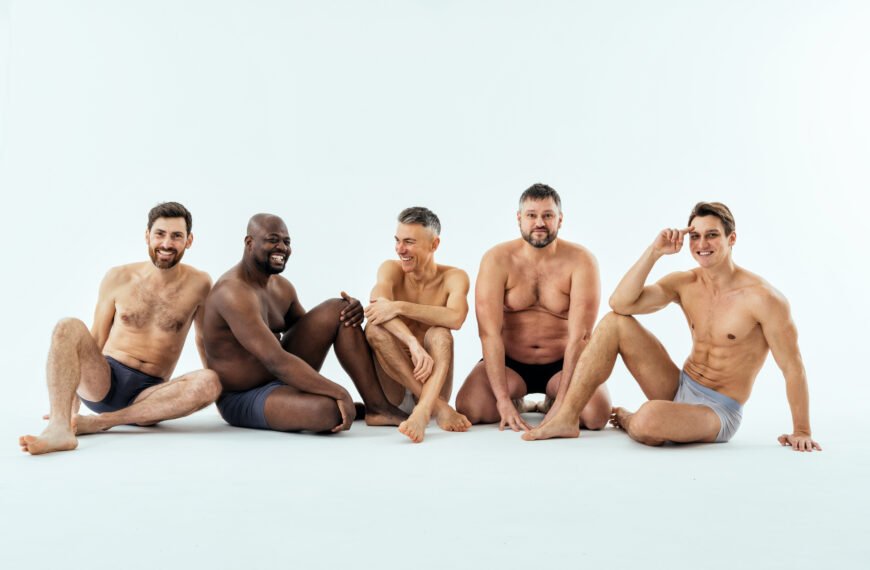

Troy, 52, took his age off his Scruff profile after finding that some men would run a mile before reading anything else. He told the Australian health site emen8 that hiding it felt a little disempowering, since he had never felt conscious of ageing until he went online.
His experience is common. What men his age want from a casual encounter, once they are in the room, has been studied much less.
What the evidence covers
Very little research asks men aged 40 to 49 about hookups specifically. Most published work on older gay men starts at 50, and the best-known sample skews well past that. The table sets out what exists.
| Source | Who was studied | Relevant finding |
|---|---|---|
| Midwestern US survey | 181 gay men aged 50+, mean age 65 | High overall sexual satisfaction; men in open relationships more satisfied than single or widowed men |
| Frequency study, same sample | Gay men 50+ | More frequent sex predicted higher satisfaction |
| Gewirtz-Meydan et al., 2018 | 20 qualitative studies of older adults, not gay-specific | Health, not age, shapes sexuality; penetrative sex dominates how sex is defined |
| Adam, Brennan, Davies and Collict, 2024 | 79 interviews with men seeking men online, mixed ages | Superficiality and unmet expectations, plus hierarchies based on age, race, body type and serostatus |
| UK app-use survey | 191 men who have sex with men | Men using apps mainly for sex scored higher on self-esteem and life satisfaction than other app users |
The rest of this piece draws on those studies and on first-person accounts, which are small and self-selected. They say something real, but not everything.
Being seen at the age they are
The Midwestern survey found something specific about age. Men in the sample reported low internalized ageism, positive body image and high satisfaction. When the researchers tested how the pieces connected, body image carried the whole effect. Ageist beliefs hurt satisfaction to the extent that they damaged how a man felt about his body.
That turns a vague complaint into something concrete. A hookup goes well when neither man is auditing the other for decline. Adam and colleagues describe app interviews in which age sits alongside race, body type and gender expression as a ranking system that bruises people. Men who have learned to treat the ranking as noise, their own and other people’s, report better sex. That finding is circumstantial, but it is consistent.
Apps are where much of this plays out. Ofcom’s 2023 research found Grindr was the most popular dating app among UK adults over 54, reaching 136,000 people. Older men are plainly there. The open question is how they are received.
Knowing what the night is for
The most consistent theme in the first-person material is intent. A 41-year-old writing for TheBody described a more discerning approach in which the sex he wants has to be more qualitative than quantitative. He still enjoys a one-night stand, but values a regular partner who is not necessarily monogamous. Roger, 54, told emen8 that no-strings arrangements suit him because his career leaves little room for a relationship, and that men his own age tend to be looking to settle down.
Those two accounts differ on what they want and agree on the method: say it early. Adam’s interviewees complained about superficiality and mismatched expectations, and both problems come from the same silence about what each man hoped to get from the evening.
Wanting only sex is not treated as a deficiency in the research. In the UK survey, men who used apps mainly for sex scored higher on self-esteem and life satisfaction than those using them for dating or friendship. The same survey linked heavy app use overall to more loneliness. The pattern suggests the trouble is not the hookup. It is the mismatch between what a man wants and what the app delivers.
Some commentators see a deeper problem. Court Vox, a sex and intimacy coach, argued on Rick Clemons’s 40 Plus podcast in July 2026 that gay men over 40 know how to find sex but were rarely taught how to find connection. That is one practitioner’s view, not a finding. It is still a useful test for a hookup. If the point was never connection, nothing has been lost by not having it.
A wider idea of sex
The 2018 synthesis of qualitative research on older adults found that people who develop health problems affecting sexual function broaden what counts as sex. The same review described a hegemony of penetrative sex that shapes expectations before anyone gets undressed. The review is not specific to gay men, and its authors did not set out to write about hookups. Its relevance here is plain anyway. A great encounter between two men in their forties or fifties is less likely to depend on a single act going to plan.
The podcast episode with sex educator Fran Frye argues that shame quietly replaces honest communication among gay men over 40 when something goes wrong in bed. The claim comes from a guest on an advice podcast and was not tested in the research. It is plausible and unproven, which makes it a reasonable starting point for a conversation between partners and nothing more.
Regulars and arrangements
The strongest quantitative result in the older-men literature is also the least surprising. More frequent sex predicted higher satisfaction, and men in open relationships were more satisfied than single or widowed men. The researchers called for qualitative work to explain why, and have not yet done it.
A reasonable reading is that structure helps. A regular partner, or a relationship with agreed rules, removes the part of casual sex that wears people down: negotiating from scratch every time. The 41-year-old writer’s preference for a consistent partner fits the same pattern. This is an inference, not a result, and the sample was older and American.
The unglamorous part
Health logistics rarely appear in lists of what makes sex good, and they should. Guidance has changed in the last few years. In 2024 the CDC recommended counselling for men who have sex with men and have had a bacterial STI in the past year about doxy PEP, a 200 mg dose of doxycycline taken within 72 hours after sex. In three large trials it reduced syphilis and chlamydia by more than 70 percent and gonorrhoea by about 50 percent. The same guidance ties it to regular testing and links to HIV PrEP, and its testing schedule is every three to six months.
Rules differ by country, and nothing here replaces a conversation with a clinician. The point for this article is narrower. A man who has sorted his testing and prevention before the evening starts can pay attention to the person in front of him.
What the sources agree on
The accounts and studies do not describe a distinct over-40 style of sex. They describe a handful of conditions that recur: an accurate profile, a clear idea of what the encounter is for, a definition of sex wide enough to survive a bad night, some regularity if possible, and a health routine that is already in place. None of that is specific to age. Whether that is a limit of the research or the actual finding is a question the field has not yet settled.
Sources
- emen8, Gay dating in your 50s (Andrew Georgiou)
- Factors associated with sexual satisfaction among older gay men (Innovation in Aging abstract) and PMC copy
- Frequency of sexual activity and sexual satisfaction among older American gay men (2026)
- Gewirtz-Meydan et al., How do older people discuss their own sexuality? (2018)
- Adam, Brennan, Davies and Collict, Dating apps and shifting sexual subjectivities (2024) and full text
- Use of gay dating apps and well-being, UK survey of 191 men who have sex with men
- PinkNews, Grindr most popular dating app among users aged 54+ (Ofcom, 2023)
- TheBody, What an older queer man wants in the dating pool
- 40 Plus: Gay Men. Gay Talk. (Rick Clemons), episode descriptions
- CDC, Clinical guidelines on doxycycline postexposure prophylaxis (MMWR, 2024) and PubMed record