A Note Before We Start
Ranking countries by how “good” or “bad” they are for LGBTQ+ people risks flattening a lot of complexity. The experience of a gay man in Lagos is not monolithic; neither is the experience of a trans woman in Amsterdam. Class, race, urbanity, and visibility all cut across national statistics. What follows tries to take that seriously while still being honest about where law and culture make life genuinely harder or easier. The goal isn’t to shame poorer nations or romanticise wealthier ones. It’s to look clearly at what’s actually happening and what, concretely, different societies have done or refused to do.
The 10 Most Liveable Countries for LGBTQ+ People
1. Iceland
Iceland legalised same-sex marriage in 2010, one hour after parliament voted unanimously to do so. That detail matters. Unanimous. Not a squeaker, not a culture war dragged out over decades. The country elected Jóhanna Sigurðardóttir as prime minister in 2009, the first openly gay head of government in the world, and this caused roughly zero political controversy. Iceland’s anti-discrimination protections cover employment, housing, and services, and its Gender Autonomy Act (2019) allows legal gender recognition based on self-declaration without psychiatric gatekeeping.
Small population, strong welfare state, high social trust. Those things aren’t coincidental. When housing and healthcare aren’t precarious, being outed is less existentially threatening. The economic vulnerability that makes homophobia so dangerous in many places is simply less present here.
2. Netherlands
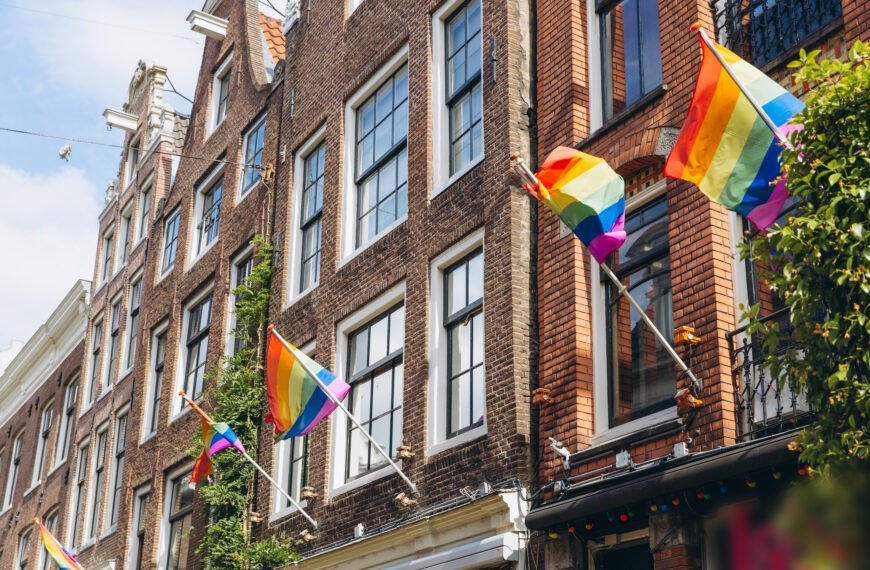
The Netherlands was the first country to legalise same-sex marriage, in 2001. Dutch LGBTQ+ life is genuinely well-integrated into civic institutions: same-sex couples have full adoption rights, trans people can change legal gender markers, and the government funds LGBTQ+ health services. Amsterdam Pride is old enough to feel almost institutional, though that’s partly because it is.
None of this is frictionless. Antisemitic and homophobic violence, often but not exclusively from young men of immigrant background, has been a serious political flashpoint. The Netherlands has its own tensions about how to talk about minority-on-minority prejudice without either ignoring it or using it as a weapon against immigration. There’s no tidy resolution there.
3. Canada
Canada legalised same-sex marriage in 2005, following a string of provincial court rulings that made federal action more or less inevitable. Federal human rights protections cover sexual orientation and gender identity. The healthcare system, imperfect as it is, provides gender-affirming care in most provinces. Toronto and Montreal have well-established queer communities with real political power.
What’s less discussed is the situation for Indigenous Two-Spirit people, who often face discrimination from both settler society and, in some communities, from post-colonial Christianity’s influence on traditional structures. Two-Spirit identity predates European contact. The idea that Indigenous communities are uniformly hostile to queer people is false, but the erasure of Two-Spirit frameworks in mainstream LGBTQ+ discourse is a real gap.
4. Belgium
Belgium legalised same-sex marriage in 2003, second in the world after the Netherlands. Full adoption rights followed in 2006. Belgium’s legal protections are comprehensive, and Brussels has an active queer scene. Discrimination complaints are processed through a federal body with actual enforcement power, not just an advisory role.
Belgium’s federal structure means some inconsistency between regions, and Flemish nationalist politics occasionally drifts toward social conservatism, but compared to what exists in most of the world, this is a fairly minor caveat.
5. Spain
Spain’s path is worth dwelling on, because it’s unusual. Spain legalised same-sex marriage in 2005, less than three decades after the death of Franco, whose regime had imprisoned gay men in psychiatric institutions and labour camps under the Law of Social Danger and Rehabilitation. The speed of that shift is genuinely remarkable, and it happened under a Socialist government that moved fast and absorbed the backlash rather than seeking consensus with the church.
Spain is also one of the few countries with strong protections specifically for trans people, following the 2023 Trans Law, which introduced self-determination for gender change without medical gatekeeping. Polls consistently show very high social acceptance of LGBTQ+ people, particularly in cities. There remains a rural-urban divide, and the far-right Vox party has made anti-trans rhetoric part of its platform, but Vox has not reversed anything.
6. Sweden
Sweden has had some form of partnership recognition since 1995 and full same-sex marriage since 2009. It’s had legal gender change procedures for decades, though early laws required sterilisation (a requirement that was removed in 2013 after sustained advocacy). The welfare state provides trans healthcare. LGBTQ+ organisations receive public funding.
Sweden is often cited as a model, and in many respects it is. It’s also a country where far-right politics has grown significantly in the past decade, where the Sweden Democrats have become the second-largest party in parliament and where attitudes among certain demographics are less liberal than the national average suggests. Sweden is not immune to the pattern of liberal legal frameworks coexisting with pockets of genuine hostility.
7. New Zealand
New Zealand legalised same-sex marriage in 2013 with a surprisingly emotional parliamentary debate. It has robust anti-discrimination protections, an accessible legal gender change process, and a history of LGBTQ+ political representation going back to Georgina Beyer, the world’s first openly trans member of parliament, who served in the 1990s.
Its small size and geographic isolation mean the queer scene in cities like Auckland and Wellington operates on a different scale than European capitals, but the legal and social environment is genuinely permissive.
8. Uruguay
Uruguay is an outlier in Latin America and deserves more attention than it usually gets. It legalised same-sex marriage in 2013, has explicit anti-discrimination laws covering gender identity, allows same-sex adoption, and the Trans Law of 2018 provides reparations to trans people who were persecuted under the dictatorship and establishes a quota for trans people in public sector employment. That last point is unusual globally.
Uruguay is also a secular country with low church influence in politics, which matters. Its neighbour Argentina also has strong legal protections, including one of the world’s most progressive gender identity laws (2012). Latin America’s picture is more heterogeneous than it’s sometimes portrayed.
9. Portugal
Portugal decriminalised homosexuality in 1982 and legalised same-sex marriage in 2010. Its 2011 gender identity law was among the most progressive in Europe at the time. Portugal is Catholic-majority, which makes its trajectory different from Scandinavian countries; the cultural shift has come more recently and has had to work against institutional religious influence.
The country is poorer than Western European neighbours, and queer people outside Lisbon and Porto report more conservative attitudes in rural areas. But at the legal level, protections are solid and enforced.
10. Taiwan
Taiwan deserves specific mention as the first place in Asia to legalise same-sex marriage, which it did in 2019 following a Constitutional Court ruling. This happened over the opposition of referendum results, through courts acting against popular sentiment, which says something complicated about the relationship between democratic process and rights.
Taiwan has strong legal protections, an active queer civil society, and Taipei Pride is the largest in Asia. The path to full equality for same-sex couples, including adoption rights for non-biological parents, has been slower and required additional legal steps. But the broader environment is genuinely accepting by global standards.
The 10 Hardest Places to Be LGBTQ+
1. Iran
Iran executes people for same-sex conduct. This is not a disputed fact. The charge is typically framed under laws against “sodomy” or “immorality.” Iran also compels gay and lesbian people to undergo gender reassignment surgery as an alternative to prosecution, presenting it as a medical solution to homosexuality in a country that still classifies it as a disorder. Gay men are executed; trans women are often pushed toward surgery they may not want or may want for entirely different reasons.
The Islamic Revolutionary government has been executing people for same-sex conduct since 1979. The number is unknown. Estimates start in the thousands. Iran’s government does not count these deaths as executions of gay people; it counts them as executions of criminals.
2. Saudi Arabia
Saudi Arabia criminalises same-sex conduct with penalties up to death under its interpretation of Islamic law. The enforcement pattern is inconsistent, which in some ways makes it harder, not easier: people are never sure when prosecution will occur. The Mutawa, religious police, have historically raided private gatherings. Saudi citizens who are known or suspected to be gay have been publicly flogged, imprisoned, and deported if foreign nationals.
The Saudi government has presented various “modernisation” efforts in recent years, and Western media has sometimes covered these in ways that obscure what hasn’t changed. The criminalisation of homosexuality has not changed.
3. Uganda
Uganda’s Anti-Homosexuality Act, passed in 2023, introduced life imprisonment for “aggravated homosexuality” and the death penalty in certain circumstances. This was a revised version of a 2014 law that had been struck down on procedural grounds. International donors and governments responded with sanctions and aid cuts. The Ugandan government has framed this as a matter of national sovereignty against Western imposition, and that framing has worked domestically.
LGBTQ+ organisations in Uganda have largely gone underground. Activists have been arrested. People have been outed by tabloids operating in full view of the law. The situation since 2023 is arguably the most extreme legal environment for LGBTQ+ people anywhere in the world outside of countries that impose the death penalty.
4. Russia
Russia criminalised “gay propaganda” in 2013, initially targeting materials directed at minors, then expanded in 2023 to cover all ages. This has been used to shut down LGBTQ+ organisations, remove content from media, and prosecute people for public displays of affection. In 2023, Russia’s Supreme Court ruled that the “international LGBT movement” is extremist, which means association with any LGBTQ+ organisation is potentially a criminal offence.
Russia is not in the same category as Iran or Uganda in terms of official state violence, but the systematic dismantling of legal protections, the cultivation of social hostility, and the use of anti-LGBTQ+ sentiment in nationalist politics has had measurable effects. Many LGBTQ+ Russians have emigrated. Those who remain face a rapidly shrinking public sphere.
5. Nigeria
Nigeria’s Same Sex Marriage (Prohibition) Act, passed in 2014, criminalises same-sex relationships, same-sex marriage, and LGBTQ+ organisations with up to 14 years’ imprisonment. In the predominantly Muslim northern states under Sharia law, penalties can include death by stoning. Nigeria has 220 million people, is the most populous country in Africa, and the law has significant popular support.
LGBTQ+ Nigerians exist, obviously, often in tight-knit networks that operate by navigating rather than challenging the system. Blackmail is a serious and underreported problem: people are outed or threatened with outing to extort money, and they cannot report the blackmail to police without risking arrest themselves.
6. Afghanistan
Under Taliban governance reinstated in 2021, Afghanistan has returned to a complete legal void for any expression of LGBTQ+ identity. Same-sex conduct is punishable by death under the Taliban’s implementation of Sharia. Many LGBTQ+ Afghans have fled; those who remain have gone entirely underground. There are no NGOs, no organisations, no visible community.
7. Yemen
Yemen’s civil war has created a humanitarian catastrophe that affects everyone, and LGBTQ+ people face additional specific dangers. Same-sex conduct is criminalised with the death penalty available as punishment. The chaos of the conflict has made targeted violence against LGBTQ+ people easier to carry out, not harder.
8. Chechnya
Chechnya, formally a republic within Russia, carries its own specific horror. In 2017, Novaya Gazeta and other outlets documented systematic detention, torture, and killings of gay men in secret detention sites. Men were held, beaten, often returned to their families in order to be killed in so-called honour killings. Ramzan Kadyrov denied that gay people exist in Chechnya. The crackdown reportedly began again in 2019.
The Russian federal government’s refusal to investigate meant there was no accountability. Human rights organisations documented as much as they could. Many gay Chechen men fled abroad.
9. Malaysia
Malaysia criminalises same-sex conduct under both civil law and, in states with Sharia courts, under Islamic law. Punishments include imprisonment, caning, and fines. The Sharia penalties apply only to Muslims. The government has conducted periodic raids on LGBTQ+ gatherings and bars, and has removed LGBTQ+ content from public media and events. A Kuala Lumpur bookshop faced pressure for selling LGBTQ+ titles.
Malaysia has a complex relationship with this: there’s a visible queer community operating under the radar in Kuala Lumpur, and enforcement is inconsistent. But the legal and political climate has tightened rather than loosened in recent years, with politicians explicitly competing to show hostility to LGBTQ+ people.
10. Egypt
Egypt does not have a specific law criminalising homosexuality, which sounds better than it is. What it has is a 1961 “debauchery” law originally targeting sex work, which courts have applied to same-sex conduct. This gives police enormous discretionary power: they can arrest people via dating apps, sting operations, and raids. They can choose to apply it or not, which creates an environment of constant uncertainty rather than clear legal threat.
The government under Sisi has cracked down harder since 2013. Following Rainbow flags appearing at a concert in 2017, police arrested at least 75 people. LGBTQ+ organisations do not formally exist. The pattern is one of periodic, severe crackdowns rather than steady low-level pressure, and it has been effective at suppression.
What These Countries Could Actually Learn From Each Other
The framing of this question matters. The implicit model in a lot of global LGBTQ+ advocacy is: poorer, more religious, more socially conservative countries should look to wealthier, more secular, more liberal ones and adopt their approaches. That model has real problems. It ignores the degree to which colonial-era laws are the source of many criminalisation statutes. India’s Section 377, Nigeria’s criminal codes, Uganda’s legal framework — these were largely imported by British colonialism. Telling those countries to adopt Western approaches to undo laws that Britain introduced is a particular kind of irony.
A more honest version of the question asks: what specific mechanisms have worked, where, and can they be adopted without requiring wholesale cultural transplant?
Legal reform through courts rather than legislatures. Taiwan and Colombia both achieved marriage equality through constitutional courts ruling against legislative inaction. This matters in contexts where popular opinion is hostile but constitutional frameworks include equality guarantees. It’s not universally available, but where independent judiciaries exist, it’s been effective.
Decriminalisation as a floor, not a ceiling. Many of the worst-case countries aren’t primarily harming LGBTQ+ people through marriage law; they’re criminalising existence. Decriminalisation doesn’t require cultural consensus. India decriminalised homosexuality in 2018 through a Supreme Court ruling, over the objection of the government. The Indian case shows it’s possible in a country with 1.4 billion people, genuine religious diversity, and significant social conservatism.
Anti-blackmail protections. Nigeria and Egypt illustrate how criminalisation is weaponised not just by the state but by private actors. Even in countries where changing the underlying law is politically impossible right now, specific laws against blackmail using threats of outing could reduce harm significantly. This is a narrow, concrete reform that doesn’t require a full legal revolution.
Economic inclusion without requiring visibility. One of the concrete arguments for LGBTQ+ non-discrimination in employment is economic: discrimination reduces productivity, increases talent flight, and costs employers money. Thailand has approached this differently from Western countries, allowing a degree of economic and cultural space for gender-variant people (particularly kathoey) without full legal recognition, and without demanding the kind of public coming-out narrative that Western advocacy often centres. That model has real limits, but it shows there are paths to economic participation that don’t require a Western-style rights discourse.
What the comfortable countries could learn. The Netherlands, Canada, and Sweden don’t have nothing to learn. The Netherlands’ approach to intra-community prejudice — where homophobia within immigrant communities is a genuine problem but is often discussed in ways that fuel racist politics — is genuinely unresolved. Canada’s relationship with Two-Spirit identity and Indigenous frameworks for gender and sexuality is something Western LGBTQ+ movements have largely ignored. Uruguay’s Trans Law, with its public employment quota and reparations component, goes further in addressing material inequality than almost anything in wealthier countries.
The assumption that wealthy, liberal democracies have “solved” LGBTQ+ rights and just need to teach others is wrong in two directions: they haven’t solved it, and even what they’ve done isn’t easily transplantable. Spain got marriage equality in 2005 partly because the Socialist government under Zapatero decided to move fast and absorb the political cost rather than seek gradual consensus. That choice was possible in that political context. It doesn’t transfer automatically.
Countries with Same-Sex Marriage or Domestic Partnership Recognition
The table below includes countries with either full marriage equality or legally recognised domestic partnerships/civil unions. Years indicate when the first national-level legal recognition took effect.
| Country | Recognition Type | Year |
|---|---|---|
| Netherlands | Marriage | 2001 |
| Belgium | Marriage | 2003 |
| Canada | Marriage | 2005 |
| Spain | Marriage | 2005 |
| South Africa | Marriage | 2006 |
| Norway | Marriage | 2009 |
| Sweden | Marriage | 2009 |
| Portugal | Marriage | 2010 |
| Iceland | Marriage | 2010 |
| Argentina | Marriage | 2010 |
| Denmark | Marriage | 2012 |
| Brazil | Marriage | 2013 |
| France | Marriage | 2013 |
| New Zealand | Marriage | 2013 |
| Uruguay | Marriage | 2013 |
| United Kingdom | Marriage | 2014 |
| Luxembourg | Marriage | 2015 |
| United States | Marriage | 2015 |
| Ireland | Marriage | 2015 |
| Colombia | Marriage | 2016 |
| Finland | Marriage | 2017 |
| Malta | Marriage | 2017 |
| Germany | Marriage | 2017 |
| Australia | Marriage | 2017 |
| Austria | Marriage | 2019 |
| Taiwan | Marriage | 2019 |
| Ecuador | Marriage | 2019 |
| Costa Rica | Marriage | 2020 |
| Switzerland | Marriage | 2021 |
| Chile | Marriage | 2022 |
| Slovenia | Marriage | 2022 |
| Cuba | Marriage | 2022 |
| Andorra | Marriage | 2023 |
| Estonia | Marriage | 2024 |
| Greece | Marriage | 2024 |
| Thailand | Marriage | 2025 |
| Czech Republic | Civil Union | 2006 |
| Hungary | Civil Union | 2009 |
| Liechtenstein | Civil Union | 2011 |
| Italy | Civil Union | 2016 |
| Cyprus | Civil Union | 2015 |
| Chile | Civil Union | 2015 |
| Montenegro | Civil Union | 2020 |
| Japan (select prefectures/national partnership) | Partnership certificates | 2015–present |
| Israel | Recognises foreign same-sex marriages | 1994 |
| Mexico | Marriage (all states) | 2022 |
Note: Some countries achieved recognition through court rulings before legislation caught up; dates reflect when marriages or partnerships became legally valid. Japan’s situation remains nationally unresolved as of 2025, with partnership certificates issued at municipal and prefectural level but no national framework.
One Last Thing
Global LGBTQ+ advocacy has sometimes been more effective at generating international conferences than at reducing the arrest rate in Cairo or the extortion rate in Lagos. The gap between legal frameworks and lived experience runs in both directions: countries with excellent laws can have significant street-level hostility, while countries without formal recognition sometimes have local communities and social spaces that provide real safety.
None of that makes the law irrelevant. It clearly isn’t. When a government decides gay people are criminals, it licenses every other actor in society to treat them that way. What it does mean is that measuring progress only through law courts misses a large part of how life actually works, and that the LGBTQ+ communities navigating hostile environments in Nigeria, Egypt, or Malaysia are not passive objects waiting for rescue from elsewhere. They are political actors making strategic decisions about what is possible where they are.