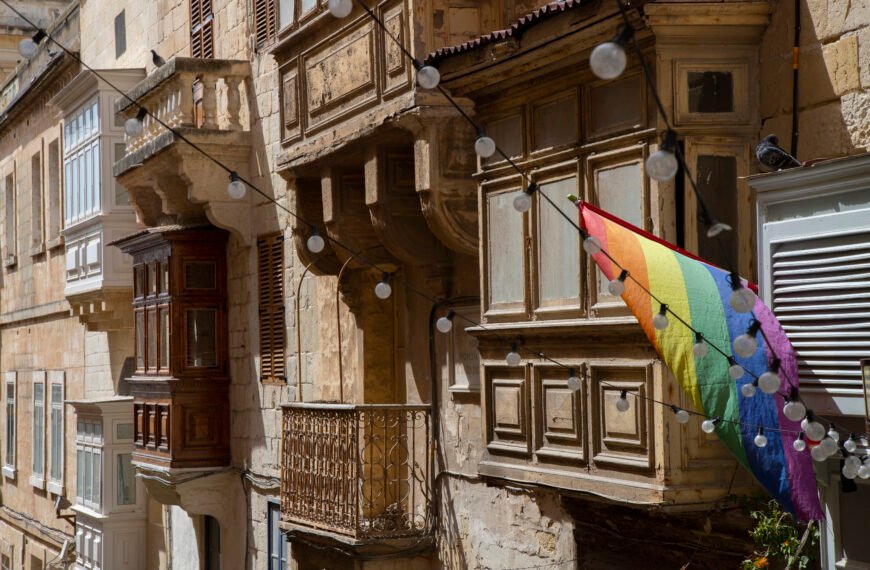

May 17 was the International Day Against Homophobia, Biphobia, and Transphobia — IDAHOBIT. Flags were raised, social posts were shared, a few government statements were issued. The 2026 theme was “At the Heart of Democracy,” which the organisers framed as a reminder that genuine democracies have to actually protect all their citizens — not just the ones who poll well. Then Monday came around and most of the world went back to normal.
Which is fine, but “back to normal” is worth examining. For hundreds of millions of people, normal means criminal law, surveillance, violence, or at minimum a life lived in deliberate invisibility. The day itself started in 2005 — the date chosen to mark 17 May 1990, when the WHO finally removed homosexuality from its International Classification of Diseases. Took until 1990. Let that sit for a second. The organisation responsible for classifying cancer and cholera was still categorising same-sex attraction as a mental disorder when the Soviet Union was still intact.
Twenty-one years of IDAHOBIT later, the picture is genuinely mixed. Progress has happened — some of it remarkable. Thailand became the first Southeast Asian country to legalise same-sex marriage in January 2025, with the Senate passing the bill 130 to 4. Dominica and Namibia decriminalised consensual same-sex acts in 2024. Liechtenstein and Liechtenstein joined the marriage equality list. But at the same time, according to ILGA World, the number of UN member states criminalising consensual same-sex acts rose for the first time in years — 65 as of this writing — after Mali passed a new criminalisation law in 2024 and Trinidad and Tobago reversed its decriminalisation ruling. The funding for LGBTQ+ civil society organisations has collapsed in many countries as US aid was cut and major foundations pulled back.
And then there are the countries actively making it worse. Hungary banned Pride events in March 2025 and authorised facial recognition technology to identify participants. Uganda’s 2023 Anti-Homosexuality Act — which carries the death penalty for “aggravated homosexuality” and was upheld by the Constitutional Court in April 2024 — is being enforced. Prosecutions are happening. The UK, for its part, dropped six places on the ILGA-Europe Rainbow Map in 2025 following the Supreme Court ruling that restricted legal recognition of trans people.
The gap between the best and worst places to be LGBTQ+ is not narrowing. If anything, the global picture is bifurcating: a cluster of countries edging toward full legal equality while a larger group entrenches or expands discrimination.
The Numbers
The best available global data comes from ILGA World’s database, ILGA-Europe’s Rainbow Index, and Equaldex. None of them measures happiness or lived experience directly — they measure law and formal policy. Law matters, but it’s an imperfect proxy. Brazil has anti-discrimination protections and a substantial culture of Pride; it also has one of the highest rates of anti-LGBTQ+ homicide in the world. Russia has no explicit sodomy law, but declared the “international LGBT movement” an extremist organisation in 2023.
The table below covers 80 countries and uses a freedom score from 0 to 100 — drawing on ILGA-Europe’s Rainbow Map scores where available (for European countries), Equaldex Legal Index scores for others, and ILGA World’s criminalisation data. For non-European countries where no standardised index score exists, the rating is a synthesis of: whether same-sex conduct is legal, whether partnerships or marriage are recognised, whether anti-discrimination protections exist, whether trans legal recognition is available, and what enforcement of any anti-gay laws actually looks like on the ground. It is an indicative score, not a clinical one.
Score guide: 100 = full legal equality, anti-discrimination protections, marriage rights, trans recognition, no social hostility in law. 0 = death penalty actively enforced for same-sex conduct.
80 Countries: Legal Position, Reality, Freedom Score
| Country | Legal Position | Ground Reality | Score (0–100) |
|---|---|---|---|
| Malta | Same-sex marriage legal (2017). Full adoption rights. Legal gender recognition by self-ID. Anti-discrimination laws comprehensive. | Best-performing country in Europe. Rainbow Index 2025: 89%. Social acceptance high. | 89 |
| Iceland | Same-sex marriage legal (2010). Full adoption. Legal gender recognition by self-ID (2019). | Strong protections. High social acceptance. Political commitment consistent. | 84 |
| Belgium | Same-sex marriage legal (2003). Full adoption. Strong anti-discrimination law. | Rainbow Index 2025: 85%. One of the earliest adopters. | 85 |
| Denmark | Same-sex marriage legal (2012). Adoption rights. Gender recognition by self-ID (2014). | Rainbow Index 2025: 80%. Nordic standard-bearer. | 80 |
| Spain | Same-sex marriage legal (2005). Full adoption. Gender recognition by self-ID (2023). | Rainbow Index 2025: 78%. Legally strong though implementation patchy in some regions. | 78 |
| Norway | Same-sex marriage legal (2009). Full adoption. Legal gender recognition reform. | Rainbow Index 2025: 69%. Solid rights framework. | 69 |
| Germany | Same-sex marriage legal (2017). Adoption rights. Gender recognition reform passed 2024. | Rainbow Index 2025: 69%. Reform of gender recognition law a recent positive. | 69 |
| Greece | Same-sex marriage and adoption legal since January 2024 — a genuine surprise given the country’s religious conservatism. | Rainbow Index 2025: 69%. Laws improved sharply; social acceptance lags. | 69 |
| Finland | Same-sex marriage legal (2017). Full adoption. Gender recognition by self-ID (2023). | Rainbow Index 2025: 70%. Consistent protections. | 70 |
| Netherlands | First country in the world to legalise same-sex marriage (2001). Full adoption. Strong legal framework. | Rainbow Index 2025: 64%. Social acceptance strong but reported hate crimes a concern. | 64 |
| Luxembourg | Same-sex marriage legal (2015). Full adoption. | Rainbow Index 2025: 68%. Small country, strong protections. | 68 |
| Ireland | Same-sex marriage legal after 2015 referendum. Full adoption. Gender recognition by self-ID (2015). | Rainbow Index 2025: 63%. Strong framework; trans healthcare access issues ongoing. | 63 |
| France | Same-sex marriage legal (2013). Full adoption. Some gender recognition provisions. | Rainbow Index 2025: 61%. Legal framework solid; social climate more mixed. | 61 |
| Portugal | Same-sex marriage legal (2010). Full adoption. Gender recognition by self-ID (2018). | Rainbow Index 2025: 67%. Good overall picture. | 67 |
| Sweden | Same-sex marriage legal (2009). Full adoption. Gender recognition reform ongoing. | Rainbow Index 2025: 66%. Historically strong but some rollback debates. | 66 |
| Austria | Same-sex marriage legal (2019). Adoption rights. | Rainbow Index 2025: 54%. Strong marriage law; gaps in other areas. | 54 |
| Switzerland | Same-sex marriage legal (2022). Adoption rights. | Rainbow Index 2025: 50%. Late to marriage equality; good framework now. | 50 |
| Slovenia | Same-sex marriage legal (2022) — first post-communist country in Eastern Europe to do so. | Rainbow Index 2025: 50%. Law is ahead of social attitudes in places. | 50 |
| Estonia | Same-sex marriage legal (2024). First Baltic state to do so. | Rainbow Index 2025: 46%. Significant legal step; social integration ongoing. | 46 |
| Croatia | Civil unions only. No same-sex marriage. Some anti-discrimination protections. | Rainbow Index 2025: 49%. Functional protections below marriage level. | 49 |
| Montenegro | Civil partnership law passed 2020. No same-sex marriage. | Rainbow Index 2025: 49%. Progress stalled. | 49 |
| Czechia | Registered partnerships (2006). No same-sex marriage. Some legal protections. | Rainbow Index 2025: 33%. Law lags behind relatively accepting public attitudes. | 33 |
| Bosnia & Herzegovina | No recognition. No anti-discrimination laws for LGB people. Same-sex conduct technically legal but deeply hostile legal environment. | Rainbow Index 2025: 40%. Highly fragmented governance makes reform difficult. | 40 |
| Albania | Same-sex conduct legal. No recognition. Anti-discrimination law exists nominally. | Rainbow Index 2025: 35%. Aspirant EU member; limited real-world protection. | 35 |
| Serbia | Same-sex conduct legal. No recognition. Anti-discrimination protections exist on paper. | Rainbow Index 2025: 35%. First Pride in 2001 saw riots. Now tolerated but not protected. | 35 |
| Kosovo | Same-sex conduct legal. No marriage or civil union. Some anti-discrimination coverage. | Rainbow Index 2025: 35%. Dependent on fragile political will. | 35 |
| Moldova | Same-sex conduct legal. No recognition. Anti-discrimination law exists but rarely applied. | Rainbow Index 2025: 38%. Positive direction, very slow progress. | 38 |
| North Macedonia | Same-sex conduct legal. No recognition. Limited protections. | Rainbow Index 2025: 29%. EU candidacy creating some pressure to reform. | 29 |
| Lithuania | Same-sex conduct legal. No recognition. Limited anti-discrimination scope. | Rainbow Index 2025: 24%. Baltic outlier — Estonia much further ahead. | 24 |
| Romania | Same-sex conduct legal. No recognition. Constitutional ban on same-sex marriage (2003). | Rainbow Index 2025: 19%. Constitutional amendment in 2003 put hard floor under progress. | 19 |
| Ukraine | Same-sex conduct legal. No recognition, though civil union discussion emerged during wartime. Trans people face significant barriers. | Rainbow Index 2025: 19%. War has both suppressed progress and, oddly, prompted some solidarity. | 19 |
| Hungary | Same-sex conduct legal. Civil partnerships (2009). Pride events banned by law (March 2025). Facial recognition to identify Pride attendees. Anti-LGBTQ+ propaganda law. | Rainbow Index 2025: 23%. Rapid regression since 2010. | 23 |
| Slovakia | Same-sex conduct legal. No recognition. Constitutional ban on same-sex marriage. | Rainbow Index 2025: 27%. Some of the most hostile parliamentary rhetoric in the EU. | 27 |
| Poland | Same-sex conduct legal. No recognition. “LGBT-free zones” — the last formally removed in 2024 after sustained EU pressure. | Rainbow Index 2025: 21%. Long decline reversed slightly with change of government in 2023. | 21 |
| Bulgaria | Same-sex conduct legal. No recognition. Significant hostility in law and practice. | Rainbow Index 2025: 21%. One of the worst in the EU. | 21 |
| Italy | Same-sex civil unions (2016). Adoption rights for step-parents only, and being eroded by current government. No marriage. | Rainbow Index 2025: 24%. Meloni government actively restricting rights. | 24 |
| Cyprus | Civil unions (2015). No marriage. Some anti-discrimination protections. | Rainbow Index 2025: 34%. Functionally limited. | 34 |
| Latvia | Same-sex civil unions recognised via court order (2023). No formal legislation. | Rainbow Index 2025: 26%. Court-driven progress; parliamentary resistance. | 26 |
| Georgia | Same-sex conduct legal. No recognition. Sweeping anti-LGBTQ+ law package passed 2024, banning all forms of LGBTQ+ representation and assembly. | Rainbow Index 2025: 12%. Accelerating repression; mirrors Russian playbook. | 12 |
| Armenia | Same-sex conduct legal. No recognition. Significant discrimination and violence. | Rainbow Index 2025: 9%. One of the most hostile legal environments in Europe. | 9 |
| Azerbaijan | Same-sex conduct legal but police harassment routine, sometimes violent. No recognition. | Rainbow Index 2025: 2%. Police conduct gay-specific entrapment and detention operations. | 2 |
| Russia | No sodomy law, but the LGBTQ+ “movement” declared extremist (2023). Gay propaganda law expanded 2022. Chechnya: extrajudicial detention and torture of gay men documented. | Rainbow Index 2025: 2%. Functionally criminalised through extremism designation. | 2 |
| Turkey | Same-sex conduct legal (pre-republic law). No recognition. Pride banned in Istanbul since 2015. Increasing police crackdown. | Rainbow Index 2025: 5%. Legally technical, practically hostile. | 5 |
| Belarus | Same-sex conduct legal (since 1994). No recognition. No anti-discrimination laws. | Rainbow Index 2025: 10%. Lukashenko regime hostile; no civil society space. | 10 |
| United Kingdom | Same-sex marriage legal (2014 England/Wales; 2020 N. Ireland). Strong historic framework. Trans legal recognition now ranked 45th of 49 in Europe after Supreme Court ruling. | Rainbow Index 2025: 46%. Dropped six places. Trans rights in significant regression. | 46 |
| Canada | Same-sex marriage legal since 2005. Full adoption rights. Legal gender recognition. Comprehensive federal anti-discrimination. | Among the top globally. High social acceptance. | 88 |
| United States | Same-sex marriage legal nationally (Obergefell 2015; codified 2022). Adoption rights vary by state. Trans rights under active federal rollback since 2025. | Diverging fast. States like California and New York ~80+; states like Texas and Florida effectively hostile to trans people. National average: 62 | |
| Mexico | Same-sex marriage legal across all states (completed 2022). Adoption rights vary. Anti-discrimination protections uneven. | Legal framework good. Femicide and LGBTQ+ homicide rates high. Colombia had 270 LGBT people murdered in 2025, a comparable measure. | 58 |
| Argentina | Same-sex marriage legal (2010). Adoption rights. Legal gender recognition by self-ID (2012, world-leading). Non-binary ID documents. | Latin American legal leader. Implementation better than most. | 78 |
| Brazil | Same-sex marriage legal via Supreme Court (2013). Adoption. Criminalisation of homophobia (2019). | Legal framework strong. Reality: highest absolute number of LGBTQ+ homicides globally year after year. | 61 |
| Chile | Same-sex marriage legal (2022). Adoption rights. Legal gender recognition. | Improving significantly in the last decade. | 65 |
| Colombia | Same-sex marriage legal (2016). Adoption rights. | Legal framework solid. Violence remains severe despite protections. | 60 |
| Uruguay | Same-sex marriage legal (2013). Full adoption. Legal gender recognition. | One of the most progressive Latin American countries. | 75 |
| Cuba | Same-sex marriage legal after 2022 referendum (67% in favour). Adoption rights. | Significant shift under authoritarian system. Implementation patchy. | 50 |
| Costa Rica | Same-sex marriage legal (2020). First Central American country. | Progressive outlier in Central America. | 63 |
| Bolivia | Same-sex conduct legal. No marriage or civil union. Some legal gender recognition. | Limited and inconsistent. | 30 |
| Peru | Same-sex conduct legal. No recognition. No anti-discrimination protections for LGBTQ+ people nationally. | Hostile political environment. | 22 |
| Ecuador | Same-sex marriage legal via Supreme Court (2019). | Legally sound but social hostility significant. | 55 |
| Venezuela | Same-sex conduct legal. No recognition. Maduro government hostile. | Decline in rights under economic and political collapse. | 18 |
| Jamaica | Criminalised. Buggery law (up to 10 years). LGBTQ+ people face severe social violence. | One of the most dangerous Caribbean countries for gay men. | 5 |
| Trinidad & Tobago | Decriminalisation was ruled constitutional in 2023, then reversed on appeal in 2024. Recriminalised. | Sharp backward movement. Ongoing legal challenge. | 10 |
| Australia | Same-sex marriage legal (2017). Full adoption. Legal gender recognition varies by state. Strong anti-discrimination framework. | High social acceptance. | 82 |
| New Zealand | Same-sex marriage legal (2013). Full adoption. Legal gender recognition by self-ID. | Among the best globally. | 84 |
| South Africa | Same-sex marriage legal (2006). First in Africa. Adoption rights. Constitutional protection. | Law is strong. Social reality harsher — “corrective rape” documented as ongoing. | 55 |
| Taiwan | Same-sex marriage legal (2019). First in Asia. Adoption rights for same-sex couples expanded 2023. | High social acceptance. Strong legal framework. | 78 |
| Thailand | Same-sex marriage legal since January 2025. Full adoption and inheritance rights. | First in Southeast Asia. Social acceptance generally good. Gender recognition gaps remain. | 68 |
| Japan | Same-sex conduct legal. No national marriage or civil union law. Courts have ruled ban unconstitutional in multiple jurisdictions; no legislation yet. | Legal limbo despite high social acceptance in cities. | 40 |
| South Korea | Same-sex conduct legal. No recognition. Military still criminalises gay sex. Limited anti-discrimination law. | Conservative government. Significant protest from religious lobby against any reform. | 25 |
| India | Decriminalised by Supreme Court (2018). No recognition. Supreme Court declined to rule on marriage equality in 2023. | Legal decriminalisation didn’t translate to social or legal equality. Trans rights via Transgender Persons Act (2019) but implementation contested. | 32 |
| Philippines | Same-sex conduct legal. No recognition. Anti-discrimination bill (SOGIE bill) has failed in Congress repeatedly for 30+ years. | Relatively socially accepting in urban areas. Law behind public sentiment. | 35 |
| Indonesia | Regional laws (Aceh province) criminalise. Nationally ambiguous but hostile trajectory. | Increasing crackdowns, raids on gatherings. Direction of travel negative. | 12 |
| China | Decriminalised 1997. Removed from mental illness classification 2001. No recognition. LGBTQ+ organisations and events routinely shut down. | Beijing’s LGBT Centre closed under pressure in 2023. Shrinking civil society space. | 18 |
| Nepal | Same-sex marriage legal via Supreme Court interim order (recognised as third country in Asia after Taiwan and Thailand). Legal gender recognition (third gender category since 2015). | Progressive framework. Implementation uneven. | 55 |
| Singapore | Decriminalised 2022. No recognition. Constitutional amendment simultaneously enshrined parliament’s right to define marriage as opposite-sex. | Decriminalisation real but ceiling imposed legislatively. | 38 |
| Malaysia | Criminalised under federal law and state sharia law. Caning and imprisonment. | Active enforcement. High-profile arrests. LGBT content banned. | 5 |
| Brunei | Death penalty (stoning) for male same-sex acts under Sharia Penal Code. Effectively in force since 2019. | International condemnation ongoing. No executions confirmed but law creates extreme fear climate. | 1 |
| Nigeria | Criminalised with up to 14 years federally. Death penalty in 12 northern sharia states. Same-Sex Marriage Prohibition Act (2014) also criminalises advocacy. | Active prosecutions. Mob violence. Northern states: sharia death penalty technically applicable. | 3 |
| Uganda | Anti-Homosexuality Act 2023. Life imprisonment standard; death penalty for “aggravated homosexuality”. Upheld by Constitutional Court April 2024. | Active enforcement. Prosecutions underway. Severe violence against LGBT people documented. | 2 |
| Kenya | Criminalised (up to 14 years). Colonial-era Section 162. Supreme Court upheld law in 2023. | Prosecutions occur. Social hostility significant. | 8 |
| Ethiopia | Criminalised (up to 15 years). | Enforcement occurs. No civil society space. | 5 |
| Egypt | Not explicitly criminalised but prosecuted under “debauchery” laws. | Mass arrests, entrapment via apps. One of the most active enforcement regimes in the region. | 6 |
| Saudi Arabia | Death penalty under Sharia law. One of the few countries where government-sanctioned executions for same-sex acts have been confirmed. | Death penalty enforced. No civil society. Visibility impossible. | 1 |
| Iran | Death penalty for male same-sex acts explicitly in the Penal Code (Articles 233–241). Executions documented. | Iran and Saudi Arabia are the only two countries where government-sanctioned executions for consensual same-sex acts have taken place since 2000. | 0 |
| Afghanistan | Death penalty applicable under Taliban rule. Execution documented. | Taliban resumed executions after 2021. Gay men have no recourse. | 0 |
| Yemen | Death penalty. Active civil war creates additional danger. | Houthi forces documented executing gay men extrajudicially. | 1 |
| Iraq | No explicit sodomy law but “immorality” legislation used. ISIS-linked groups have murdered gay men. 2024 law criminalises same-sex acts with up to 15 years. | Extremely dangerous. Militias operate with impunity. | 2 |
| Morocco | Criminalised (up to 3 years). Prosecutions routine. | Active enforcement. Apps used as entrapment. | 8 |
| Ghana | Criminalised. New Human Sexual Rights and Family Values Act passed 2024 — criminalises LGBT identity, advocacy, and support. | Among the worst recent legislation globally. Signed into law under US evangelical influence. | 3 |
| Pakistan | Death penalty theoretically applicable under Sharia. In practice sentences are imprisonment. | Climate of extreme hostility. Trans community (hijra) has some legal recognition but faces violence. | 5 |
What the Table Doesn’t Say
A score of 46 for the United Kingdom and a score of 2 for Russia are not equivalent situations in practice. The UK score dropped because of legal technicalities around gender recognition — serious for trans people, but not comparable to Russia’s reality of extrajudicial detention camps in Chechnya and a legal system that now treats gay advocacy as terrorism. The table measures formal law, not fear.
Nor does legal equality mean cultural safety. Brazil’s score reflects a genuinely strong legal framework. It also has a country where, year after year, more LGBTQ+ people are murdered than anywhere else on earth in absolute numbers. South Africa has the most progressive constitution in Africa and documented rates of “corrective rape” against lesbians that human rights organisations have flagged as a crisis for two decades.
The countries that are genuinely good places to be LGBTQ+ — Malta, Iceland, Belgium, Canada, New Zealand, the Nordics — share some characteristics: marriage equality that has been in place long enough to be normalised, legal gender recognition systems that don’t require surgery or psychiatric gatekeeping, anti-discrimination laws with actual enforcement, and governments that don’t treat LGBTQ+ rights as a culture-war chip to be played against the EU or a domestic opposition.
The countries at the bottom share a different characteristic: the active use of anti-LGBTQ+ sentiment as a political tool. Uganda’s 2023 law was timed around elections and domestic scandal, as researchers at Oxford have noted. Hungary’s Pride ban came when Orbán needed a domestic culture-war story. Ghana’s 2024 law arrived partly through US evangelical lobbying that has now been documented across multiple African legislatures. The persecution isn’t incidental to governance; it’s a feature of it.
The Funding Crisis Nobody Covered
The 2026 IDAHOBIT theme — “At the Heart of Democracy” — is pointed in a way the press releases don’t quite spell out. According to ILGA World, the current wave of democratic backsliding is happening alongside cuts to the foreign aid that kept LGBTQ+ civil society organisations running. The US aid freeze from 2025 onwards, combined with major foundations pulling back from this area, has left organisations in criminalising countries without the resources to document abuses, provide legal support, or simply operate. ILGA World itself warned its database — the primary global source for this kind of legal data — is at risk of closure without new funding.
When the organisations that track the persecution disappear, the persecution becomes harder to document and easier to deny.
Sources and Further Reading
- ILGA World: IDAHOBIT 2026 press release
- ILGA World: Pride Month 2025 global data update
- ILGA-Europe: Rainbow Map 2025
- ILGA World Database: Criminalisation of consensual same-sex acts
- Equaldex: Global LGBT Equality Index
- Wikipedia: LGBTQ rights by country or territory — useful aggregation of national laws
- Wikipedia: Capital punishment for homosexuality
- Human Rights Watch: Uganda court upholds Anti-Homosexuality Act (April 2024)
- Human Dignity Trust: Country profiles for criminalising states
- The Urban Herald: 64 countries still criminalise LGBTQIA+ people (2026)
- Oxford Law Blog: The politics behind Uganda’s Anti-Homosexuality Act
- ILGA-Europe press release: UK joins Hungary and Georgia with biggest drops (2025)
- Al Jazeera: Thailand marriage equality law takes effect (January 2025)
Scores are indicative and synthesise multiple indices. For European countries, ILGA-Europe’s Rainbow Map percentage has been used directly. For non-European countries, scores combine Equaldex Legal Index data, ILGA World criminalisation status, and documented enforcement patterns. Last updated May 2026.