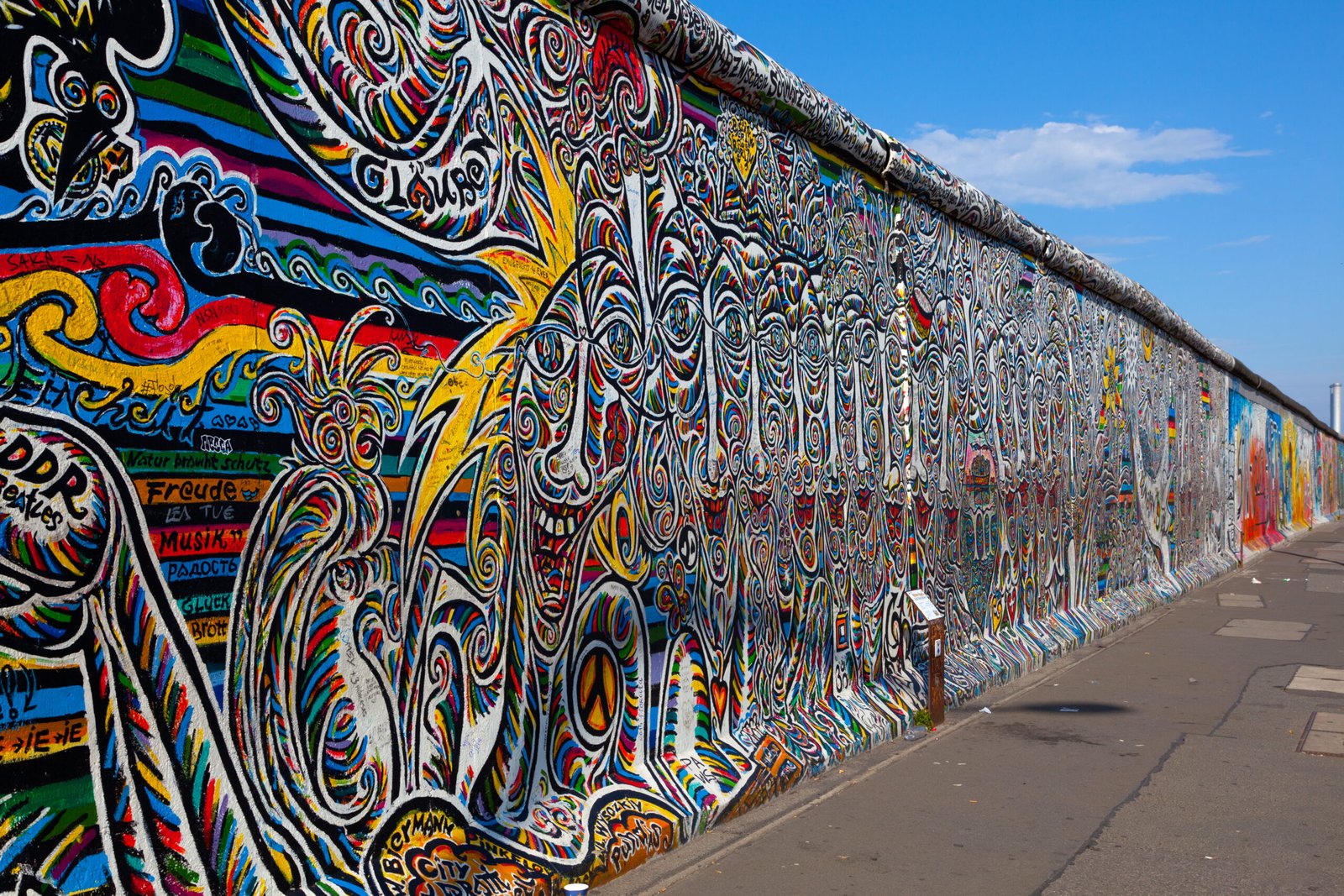
Most retellings of the Berlin Wall era sort neatly into good German and bad German, gay liberation in the west against totalitarian repression in the east. Historian Samuel Clowes Huneke, who has spent years researching gay life on both sides of the border, argues that the real story refuses to sit still inside that frame, as he told The Berliner in an interview about his research. East Germany decriminalized homosexuality in 1968, a year ahead of the West. West Berlin, meanwhile, kept a version of the Nazi-era law against gay sex on the books well into the 1960s. Neither side gets to claim the moral high ground outright, and the individual stories that survive from both sides of the Wall are stranger and more specific than either myth allows.
Here are four of them.
Günter Litfin, the man they called “Dolly”
Günter Litfin was a 24-year-old tailor who tried to swim across the Humboldthafen canal to West Berlin on August 24, 1961, eleven days after construction on the Wall began. Border police shot him in the head. He was the first person killed trying to cross it.
What happened next is the part usually left out. East Germany’s state newspaper, Neues Deutschland, didn’t just report his death, it went out of its way to smear him, mocking his memorial and repeatedly calling him “Dolly,” a homophobic slur commonly aimed at male sex workers at the time, according to writer Redfern Jon Barrett’s account of queer life across the divided city. Whether Litfin was in fact gay is still debated by historians, but the state’s instinct, faced with an inconvenient death at the border, was to reach for a slur that would make him easier to dismiss. It’s a small, ugly detail that tells you something larger about how both German states used homophobia as a tool whenever it was convenient, regardless of which side of the ideological line they stood on.
Litfin is remembered today at a small museum near the Berlin Wall Memorial on Bernauer Strasse, run for years by his own brother. His name also came up in a 2026 discussion hosted by the Berlin Wall Foundation around historian Andrea Rottmann’s research, where a curator of the foundation’s oral history program raised the question of how his memory, and queer memory more broadly, gets included or left out of how the Wall is publicly remembered, per visitBerlin’s event listing for that talk.
Christel Rieseberg, who kept the lesbian bar running
In 1963, two years after the Wall went up, Christel Rieseberg opened a bar with her girlfriend in Schöneberg. It changed names over the years, Club 10, then Club de la Femme, then Dinelo, but it stayed a lesbian space through a decade when West Berlin’s queer scene was rebuilding itself almost from scratch, according to visitBerlin’s timeline of the city’s LGBTQ+ history. The Wall had just cut Berlin off from its own reputation. Before 1933, the city had been the site of the world’s first gay rights organization, the Scientific-Humanitarian Committee, and a gay neighborhood in Schöneberg that predated anything comparable elsewhere. All of that had been destroyed under the Nazis, and when the Wall went up in 1961, what was left of Berlin’s queer associations mostly disbanded again, unable to function as a divided city’s outpost for the kind of open, cross-border culture they’d had before.
Rieseberg’s bar was one of the small, stubborn threads that kept going anyway. By 1966 there were 28 gay and lesbian venues counted in West Berlin, men meeting at Elli’s Bier-Bar or dancing at the Kleist Casino, drag shows at Chez Nous, and Rieseberg’s bar for women who wanted a space that wasn’t built around men. None of this made headlines. It’s the unglamorous, room-by-room version of how a queer community actually rebuilds itself after catastrophe, one bar with a landlord willing to look the other way, one couple willing to put their names on a lease.
Charlotte von Mahlsdorf, who moved a bar into her basement
Charlotte von Mahlsdorf’s story doesn’t fit into any single box, which seems to have been more or less her intention. Born Lothar Berfelde in 1928, she grew up under a violent Nazi father, found early encouragement from a cross-dressing lesbian aunt who handed her a copy of Magnus Hirschfeld’s 1910 book on transvestism, and in 1944, at sixteen, killed her father with a rolling pin after he threatened the rest of the family, according to an academic account of her life archived by the GLBTQ Encyclopedia Project. She served a few months in a youth detention facility before the war’s chaos overtook the sentence.
By the 1960s she’d taken over a derelict manor house in the East Berlin district of Mahlsdorf, slated for demolition, and started filling it with rescued furniture. When East German authorities shut down the Mulackritze, a historic Scheunenviertel pub that had once drawn queer regulars including Marlene Dietrich, Charlotte reportedly hauled the entire interior to her basement by handcart and reassembled it, according to Berlin Unwrapped’s account of the museum she eventually built around it. Starting in 1974, that basement bar became the regular meeting place for East Berlin’s Homosexual Interest Group, a rare fixed address for a community that otherwise had almost nowhere to gather. In her own words, quoted in a piece on her legacy, once the Wall went up, “it was finished, gay life” in the East, “no place to meet but the tramway stations and the public toilets.” Her basement became one of the few exceptions.
Her legacy isn’t uncomplicated. There’s substantial evidence Charlotte informed for the Stasi at some point, something she never fully explained and biographers still argue about, per The Bristorian’s profile of her. She survived two regimes that each, in their own way, wanted her gone, and did it partly by making herself useful to both. That contradiction is part of what made her story compelling enough to become Doug Wright’s Pulitzer-winning play, “I Am My Own Wife.” She left reunified Germany in 1995 after neo-Nazis attacked her manor, and died on a visit back to Berlin in 2002. The museum is still open.
The film that premiered the night the Wall fell
On the evening of November 9, 1989, East German director Heiner Carow’s film “Coming Out” premiered at the Kino International on Karl-Marx-Allee. It was the only feature film DEFA, the state studio, ever made about a gay man’s life, and it followed a young teacher torn between the woman he’s engaged to and the man he’s fallen for, shot on location in actual East Berlin gay bars, with real regulars from the scene playing extras rather than actors, according to the DEFA Film Library’s program notes. Trans activist Charlotte von Mahlsdorf herself has a small cameo as a barmaid.
Partway through the screening, word started moving through the theater that the border was open. By the time the credits rolled, people were leaving the cinema to join the crowds already pouring toward the checkpoints. Historian Samuel Clowes Huneke, describing the moment to Haaretz, called it an extraordinary coincidence: the first and last honest gay film East Germany ever made premiering on the single night its border with the West stopped meaning anything. Lead actor Matthias Freihof and the rest of the cast reportedly heard the news of the Wall opening from inside the theater itself, according to reviews collected in the film’s Amazon listing of critical responses. Whatever the East German state had intended by finally allowing this story onto a screen, its timing turned the premiere into something closer to a funeral and a birth happening in the same room.
What the archives leave out
Historian Andrea Rottmann’s 2023 book, “Queer Lives Across the Wall,” makes the case that most of what we think we know about queer life in divided Berlin comes from the loud, documented spaces, court records, Stasi files, bar raids, and misses almost everything that happened quietly in between. Her research turns up queer community in an unexpected place: East German women’s prisons, where chronic staffing shortages forced officials to tolerate lesbian relationships among inmates that they officially claimed to disapprove of, according to a review of the book in Gender & History. It’s a small, uncomfortable footnote, but it says something true about how queer life under surveillance actually works: not as a clean story of resistance or repression, but as whatever people could scrape together in the gaps the state didn’t bother, or couldn’t afford, to close.
What’s left to see
Berlin’s Memorial to Homosexuals Persecuted Under Nazism sits in the Tiergarten, across from the much larger Memorial to the Murdered Jews of Europe, a single concrete box with a window looking in on a looping video of two people of the same gender kissing, per Pink Ticket Travel’s guide to queer Berlin. It commemorates Nazi-era persecution specifically, which means the Wall-era stories above still don’t have a dedicated public monument of their own, only oral histories, a handful of academic books, a museum in the far eastern suburbs that most tourists never make it to, and the memory of what a state newspaper once called a dead man on a canal bank.
That gap is worth sitting with. The Wall is remembered, correctly, as a story about families split apart, about escape attempts and watchtowers. It was also, for a specific and much less publicized set of people, a wall that ran straight through their own community, cutting off lovers, separating a woman like Christel Rieseberg from whatever East Berlin equivalent of her bar might have existed, and turning ordinary queer life on both sides into something that had to survive in prisons, tramway stations, and one trans woman’s basement.
Sources
- The Berliner: Cruising through Berlin’s queer history
- Redfern Jon Barrett: Cold War Queers, Same-Sex Love Across the Berlin Wall
- visitBerlin: History of Homosexuality in Berlin
- visitBerlin: Threatened Desire, Queer Life in Divided Berlin, 1945-1970 (event listing)
- Wikipedia: LGBTQ culture in Berlin
- Gender & History: review of Andrea Rottmann’s “Queer Lives Across the Wall”
- University of Toronto Press: Queer Lives across the Wall
- GLBTQ Archive: biography of Charlotte von Mahlsdorf
- The Bristorian: Remembering Charlotte von Mahlsdorf
- Berlin Unwrapped: Charlotte’s Amazing House of Treasures
- Interminable Rambling: Charlotte von Mahlsdorf and the Importance of History
- DEFA Film Library: Coming Out, program notes
- Haaretz: Nazis, Sex and Stasi Paranoia, Cruising Through Gay Life in Cold War Germany
- Wikipedia: Coming Out (1989 film)
- Pink Ticket Travel: Our insider’s guide to the best of LGBTQ+ Berlin